


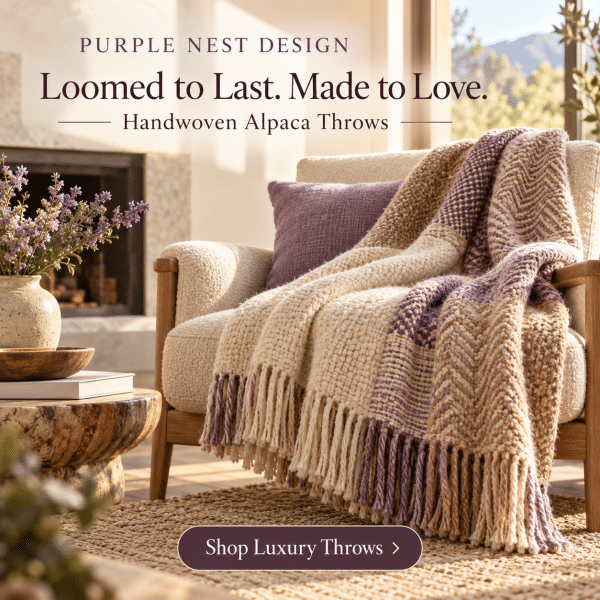
At Purple Nest Design, a throw blanket is presented as more than a layer of warmth: it is also a piece of textile craft shaped by fiber, weave and finish. The company works with artisan weavers in Peru and Ecuador to produce handwoven and hand-finished alpaca throws. Its collections address different tastes and uses, from lightweight layers to substantial, textured pieces, giving shoppers and interior professionals a variety of ways to bring the material into a room. Purplenestdesign centers its range on the relationship between traditional weaving and considered home design.
The site describes its throws as ethically made, and emphasizes direct partnership with skilled artisans. Rather than focusing on a single blanket, Purple Nest Design offers multiple collections with distinct textures, patterns and fiber combinations. That breadth makes the company’s approach worth understanding: choosing among the throws involves considering not just color, but also weight, surface, reversibility and the way a piece is made.
Reading the range through texture and weight
Purple Nest Design organizes its offerings around noticeable differences in feel and appearance. The site suggests lightweight options for layering and cool evenings, as well as heavier weaves, cables and bouclé designs that have more visual presence on a sofa or bed. Patterned and colorful throws provide another direction for shoppers who want a textile to add a more expressive note to a room. These categories provide a useful starting point because they connect the product’s character to how someone might use or display it.
Alpaca is the central material across the range. The company describes it as naturally soft, warm and textured, with insulation that can provide warmth without the weight of a heavier blanket. It also highlights breathability and a naturally rich palette that includes soft, earthy tones. Those are the qualities Purple Nest Design associates with the fiber; they are not a substitute for comparing the construction of individual throws, since the listed products vary in materials and weave.
Some pieces are made from 100% baby alpaca, including undyed options in natural shades. Others combine alpaca with Peruvian Pima cotton. The product listings show these blends in cable designs, while the site also presents bouclé and patterned weaves. This variety matters: a shopper looking for a smooth, understated layer may be drawn to a different surface than someone seeking a pronounced cable or sculptural looped texture. The company’s collection descriptions help signal those contrasts without treating every throw as interchangeable.
What handwoven and hand-finished mean here
Purple Nest Design describes a process that begins with alpaca fiber from the Andes and continues on traditional wooden looms. The site says each throw is woven one at a time by an artisan. This account places the loom at the center of the product’s making: the fabric is formed through a skilled, deliberate process rather than produced as a fast machine-made blanket. The emphasis is on the work involved in turning threads into a finished textile, not on a claim that every item has identical details.
Finishing is another part of the story. According to the company, many throws are brushed by hand with the teasel plant, which lifts the fibers and creates a soft, lustrous surface. Fringe is tied and edges are finished by hand. The site notes that, for some throws, finishing the piece can take nearly two days. That qualification is important: the detail applies to some products, not necessarily every item in the range. Still, it illustrates how the final appearance and feel can depend on work that happens after weaving is complete.
The combination of handloom weaving and individual finishing gives shoppers a way to think about a throw as both a functional textile and a crafted object. The site’s language of pieces made to be treasured reflects that positioning. A more practical way to assess the range is to look at the specific construction named for each product: whether it is handwoven or handloomed, whether it includes cotton, and whether its description identifies a cable, bouclé, reversible or patterned design.
Collections with different visual signatures
The collection names point to a range of design approaches rather than one uniform house style. Kallpa, for example, is associated with expressive patterns and a silky character in the site’s overview. Product listings show Kallpa throws in combinations such as copper and navy, tobacco and wheat, glacier gray and white, and apricot mist. These examples show how a collection can use color relationships to make pattern a central feature.
Kani is described as reversible, and Purple Nest Design notes that Kani throws can pair with complementary Kallpa pieces. The company frames this as a way to coordinate collections while shifting the mood by turning a reversible throw to its other side. The Kani listings include combinations such as khaki and olive green, natural tobacco and white, lavender and white, and fern green and white. For someone planning a room, that reversible construction offers two visible faces within one piece, while the complementary pairing idea can help connect separate textiles.
Other collections focus on texture or structure. The site identifies bouclé throws as sculptural and finished with fringe. Its listings include ivory, olive green, cacao brown, mauve pink, brown mist and light tan versions. Muru is associated with classic cabled cotton, while product listings specify baby alpaca and Peruvian Pima cotton for cable throws. Kulsi is described as having a soft texture and fringe, and the range includes an undyed baby alpaca and Pima cotton version. These distinctions help shoppers narrow the field by surface and construction before settling on a color.
Wasi offers another clearly described direction: handloomed throws made from 100% undyed baby alpaca. The product listings include ivory, ivory mist, silver and rich brown. Allira appears in the listings as a superfine alpaca option, including a silver and ivory moon-mist colorway. Other named collections, such as Pacha and Yachana, include reversible or patterned designs. These examples illustrate the range without suggesting that every collection shares the same materials or finish.
Choosing a throw for a room or a gift
A useful selection process starts with the intended role. For a light layer, the company points shoppers toward feather-light baby alpaca. For a throw meant to read as a more substantial accent on a sofa or bed, it directs attention to heavier weaves, cables and bouclé. Color and pattern then refine the choice: understated natural shades can keep the textile visually quiet, while more expressive combinations can make it a focal detail. These are design considerations, not promises about how a particular item will perform in every home.
For a gift, the same distinctions can make browsing more focused. A recipient who prefers restrained color might appreciate an undyed or softly toned option, while a person drawn to stronger visual contrast may prefer one of the patterned collections. Reversibility can be relevant when flexibility in display is appealing. The site presents its throws for gift givers as well as interior designers and boutique buyers, so its assortment is intended to serve both personal selection and design-oriented sourcing.
It can also help to read each product’s material description rather than relying on a collection name alone. Some throws are listed as 100% alpaca or 100% baby alpaca; others specify an alpaca-and-Pima-cotton blend. The site’s broad descriptions of natural softness, warmth and breathability concern alpaca as a fiber, while the individual product listing is the place to confirm the stated composition of a particular item. That distinction keeps the selection grounded in the details actually provided.
A company built around craft and coordination
Purple Nest Design’s identity rests on two connected ideas: artisan production and a coordinated collection of home textiles. Its account of weaving in Peru and Ecuador foregrounds the skills of the people who work at the loom and finish the throws. The company says the practice helps preserve the art of weaving, and describes its work with artisans as a direct partnership. These are the company’s own statements about its mission and production relationships.
At the same time, the product range is organized for visual choice. Textures, colors, fiber blends and reversible designs let customers compare pieces according to the role they want a throw to play. The invitation to pair Kani with complementary Kallpa designs makes coordination an explicit part of the assortment, while the broader selection includes quieter natural shades, cables, fringe and more expressive patterns.
For shoppers, that combination offers a practical route into the range: decide first whether the priority is lightness, a more substantial texture, a particular fiber blend or a strong pattern, then compare the named collections and product details. The company’s account of handloom weaving and hand finishing adds context to those choices. The result is a catalog presented not simply as a set of blankets, but as a group of distinct textiles whose materials and making are part of their design.
Get all details about Purplenestdesign
Sponsored by Gabal Global Group, with publishing tools from CheapPlugins.