


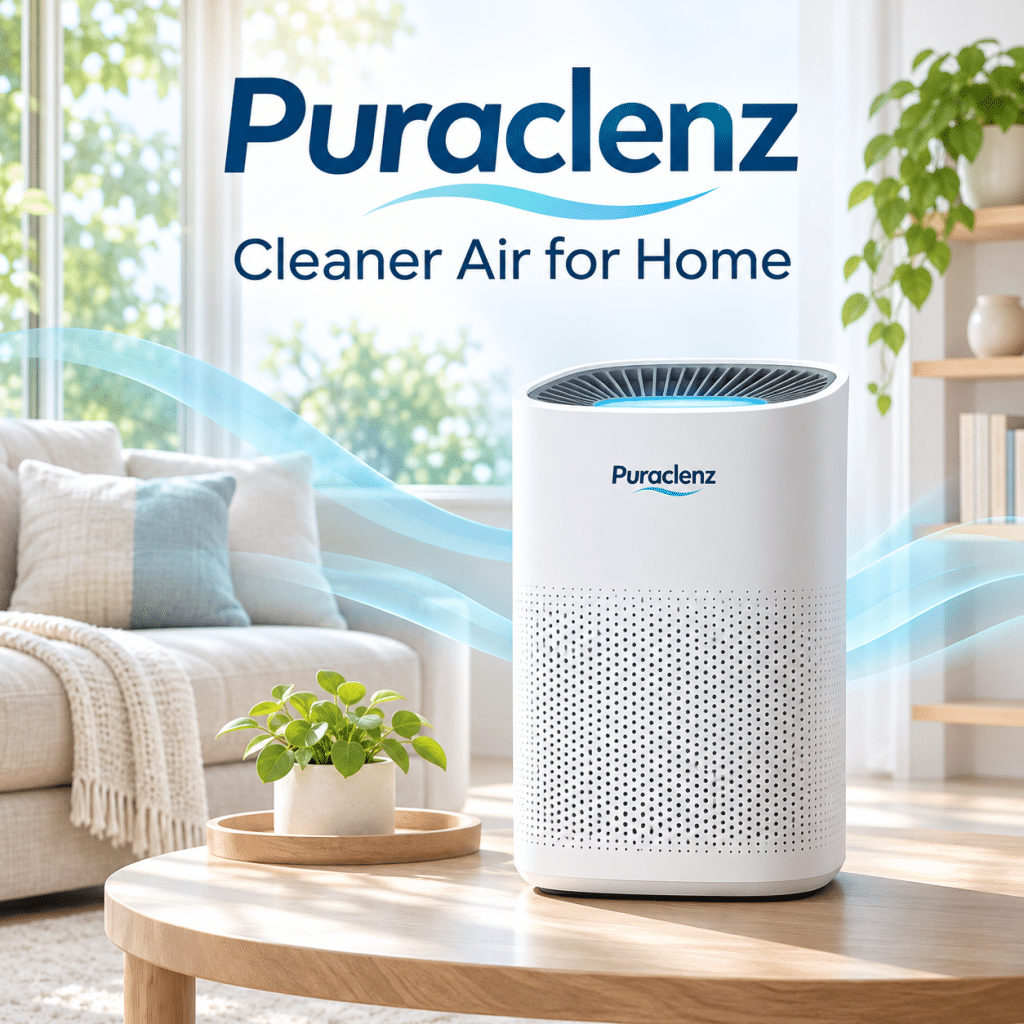
Puraclenz builds its air-purification lineup around a particular distinction: treating pollutants in the air and on exposed surfaces is not quite the same task as capturing airborne particles in a filter. The company’s two models, Photon and Core, reflect that difference. Both use PCO purification, while Core adds several filtration and treatment stages; Photon is positioned as a compact addition for households that already use HEPA filtration. Puraclenz describes its products as ozone-free and intended for continuous use, and publishes separate laboratory results for specific performance claims.
This makes the most useful way to understand Puraclenz less a simple ranking of one purifier over another and more a comparison of approaches. The company presents PCO as the shared foundation for addressing air and surface pollutants, then distinguishes the models by whether the household wants that technology alongside existing HEPA equipment or built into a single unit with other components. The details matter: the models differ in size, included technologies, replacement parts, and the areas specified for their respective functions.
One shared technology, two product roles
Puraclenz describes its patented ionic PCO process as generating ions that deactivate mold spores, viruses, and bacteria in the air and on surfaces. The company’s pages frame this as a proactive complement to filtration: rather than relying only on particles passing through a filter, PCO is intended to treat pollutants beyond the unit’s filter path. The available material does not provide a full technical explanation of the process, so it is best understood here in the terms the company supplies, rather than as a replacement for every kind of filtration.
Photon is the more focused of the two options. Puraclenz positions it for homes that already use HEPA filtration and want to add PCO purification. It treats air and exposed surfaces, and its compact form can sit on a table or be mounted on a wall or ceiling. The listed dimensions are 11.25 inches high and 5.1 inches wide, with a weight of 2.8 pounds. The company says Photon does not require regular HEPA filter replacement, distinguishing its upkeep from a purifier built around replaceable HEPA media.
That design choice gives Photon a defined role in a household’s existing setup. It is not presented as an all-in-one substitute for HEPA particle capture; rather, Puraclenz describes it as an addition to homes that already use that kind of filtration. The product page lists a pre-filter and a recharge cell as replacement parts, but the supplied information does not specify the interval for replacing the cell or provide a full maintenance schedule. Those are practical points a buyer would need to confirm for their intended pattern of use.
Core takes the integrated route. It combines PCO with a pre-filter, a True HEPA filter, activated carbon, and a germicidal UV-C lamp. Puraclenz calls this a five-stage system, with each stage assigned a different role. Its pre-filter screens larger pet hair and dust; the H13-rated HEPA filter is described as trapping fine particles; activated carbon is intended to absorb odors, volatile organic compounds, and mycotoxins; and the UV-C lamp is described as inactivating certain pathogens that pass through or are caught in the filter. The PCO stage is the shared element that the company says treats pollutants in air and on surfaces.
For Core, Puraclenz lists HEPA coverage of up to 1,575 square feet and PCO treatment of up to 3,000 square feet. The distinction between those figures is important: the page assigns different areas to different functions, rather than presenting a single coverage number for the entire system. The company also says the HEPA filter should be replaced every six months or sooner. Listed replacement parts include a core filter, recharge cell, and UV-C lamp. Core is substantially larger than Photon at 27.5 inches high and 12.1 inches wide, and weighs 20 pounds.
What the performance claims do—and do not—describe
Puraclenz’s website reports independent laboratory results for the Photon purifier, with separate figures for particular organisms, locations, and test conditions. It says Photon reduced Candida albicans on surfaces by 99.75 percent and Aspergillus brasiliensis in the air by 95.1 percent. For viruses, the company reports a 99.4 percent reduction of MS2 bacteriophage in the air and a 58 percent reduction of SARS-CoV-2 on surfaces. It also reports reductions involving two bacteria: 99.7 percent for Methicillin-Resistant Staphylococcus epidermidis in the air and 95 percent for Staphylococcus aureus on surfaces.
These results should be read as specific test claims, not as a guarantee of the same outcome in every room or household. The cited figures concern named organisms and distinguish between airborne and surface measurements; the page does not present them as a universal measure of every possible contaminant. Nor does the material supplied here provide the full laboratory protocols, test duration, room conditions, or independent reports themselves. Puraclenz also refers to allergen reduction, but clarifies that its cited allergen category includes non-living sources such as pet dander, cockroach matter, and dust mite matter.
That attention to the location of a pollutant is central to the company’s presentation. PCO is described as treating air and exposed surfaces, while Core’s filter stages capture or absorb material that passes through the unit. The distinction is useful when comparing the products, but it does not mean that either purifier addresses every source of indoor air quality concerns. The supplied pages describe purifier technologies and selected test results; they do not discuss diagnosing or repairing building problems such as moisture intrusion or ongoing mold growth.
Puraclenz also describes the air leaving its purifiers as certified ozone-free and says laboratory testing found no production of VOC by-products or ultrafine particles. Those are company statements about the output of its products. The website’s product descriptions further characterize the units as whisper-quiet and designed for automatic, continuous operation, though the supplied information gives no sound measurements or operating schedules. Readers comparing these claims may want to consult the detailed product documentation for the exact test methods and operating conditions.
Matching a model to an existing setup
The company’s own comparison suggests a straightforward starting point: consider whether HEPA filtration is already in place. For a home that already has HEPA equipment, Puraclenz presents Photon as a way to add its PCO approach without adding another regular HEPA filter replacement. Its small footprint and low listed weight may also matter where a tabletop position or wall or ceiling mounting is preferable. The supplied pages do not state how many rooms a single unit can effectively serve under every layout, so the “up to” coverage language should be treated as the company’s stated range rather than a guarantee for a particular floor plan.
For someone seeking PCO and particle filtration in one appliance, Puraclenz positions Core as the combined option. Its HEPA and carbon stages extend the product’s stated functions beyond the PCO-centered role assigned to Photon. That breadth comes with more components to maintain: the HEPA filter is specified for replacement every six months or sooner, and the product listing includes additional replacement parts. Core is also much heavier and larger, details that could influence where it can be placed and whether it is easy to move between rooms.
These differences make the intended use more relevant than a bare comparison of feature counts. A household with existing filtration may value adding a separate PCO device, while someone who wants multiple technologies housed together may prefer to assess Core. Neither description by itself establishes which model is best for an individual home. Room layout, the household’s existing equipment, the kinds of particles or odors of concern, placement options, and willingness to replace filters all affect the practical decision.
For Core, the product page identifies dust, pollen, pet dander, smoke, odors, VOCs, and mycotoxins among the materials its stages are intended to address. The HEPA filter is described as trapping 99.97 percent of listed particles down to 0.1 micron, while carbon is assigned the role of absorbing odors and volatile compounds. Puraclenz also says the UV-C component acts on material passing through or trapped in the filter. These are descriptions of the system’s intended functions, not a substitute for reviewing specifications or determining whether the unit addresses a particular indoor concern.
Ownership details on the company’s pages
Puraclenz lists a two-year warranty on its purifiers, a 30-day money-back guarantee, and free ground shipping in the contiguous United States. Its pages also state that the purifiers are HSA/FSA eligible. These are company-provided purchase details, and the material supplied here does not spell out the complete warranty terms, return conditions, eligibility requirements, or shipping exclusions. Buyers should check the current terms before relying on a particular provision.
The site additionally advertises optional protection plans covering mechanical and electrical breakdowns after the manufacturer’s standard two-year warranty expires. It says approved claims may receive product replacement or reimbursement of the purchase price paid, while also noting that limitations and exclusions apply. This is distinct from the purifier’s standard warranty, and the page directs purchasers to separate terms and conditions for the plan. It should therefore be considered as an optional coverage product, not as a description of what the standard warranty provides.
Overall, Puraclenz’s lineup is organized around a particular combination of surface-and-air treatment and conventional filtration choices. Photon is the compact PCO addition aimed at homes already using HEPA; Core combines PCO with HEPA, carbon, and UV-C in a larger unit with scheduled filter replacement. The company’s published laboratory figures offer specific evidence it cites for Photon, while its product comparison explains how it intends the two models to fit different household arrangements. A careful comparison starts with those distinctions—and with the limits of the information available—rather than treating the models as interchangeable or assuming the stated test results apply identically in every setting.
Get all details about Puraclenz
Sponsored by Gabal Global Group, with publishing tools from CheapPlugins.