


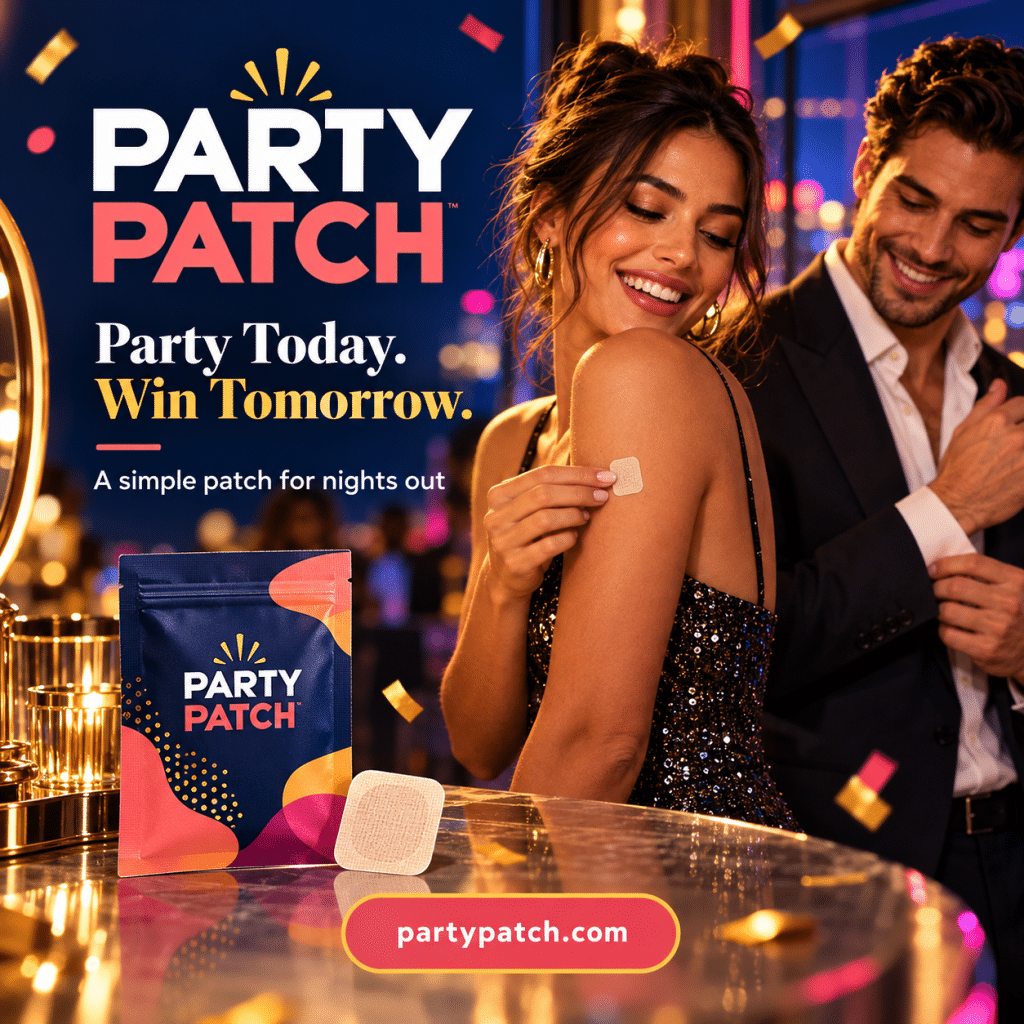
Partypatch’s Partypatch The Party Patch (Traditional) is presented as a wearable vitamin patch, not a drink or tablet. Its product page describes a 24-hour, slow-release format and positions the patch as support for energy, clarity, hydration, and everyday readiness. That daily-wellness framing sits alongside a broader brand identity built around parties and feeling better after a night out, so it is worth separating the specific product directions from the site’s general hangover-defense language.
The distinction matters because the pages describe more than one use context. The homepage encourages customers to apply a patch before going out, wear it while partying, and remove it in the morning. The Traditional product page instead tells users to apply it in the morning and wear it through the day and night, replacing it the next morning. Both descriptions center on a patch worn for an extended period, but they do not present the same routine. Anyone considering the item should read the directions on the relevant product packaging and page rather than assume every patch or use case is identical.
A daily-wellness product within a party-oriented brand
The Traditional patch page calls the product a “24-hour slow-release vitamin patch” and describes it as a way to support daily energy, clarity, and hydration. The page also uses the language of balance, calm, and readiness for busy schedules. Its suggested routine is deliberately simple: apply in the morning, wear throughout the day and night, and replace the patch the following morning.
Elsewhere, Partypatch uses short celebratory messaging—“Party Today. Win Tomorrow.”—and describes its patches as vitamin-infused support for a better day after a night out. Its collection page refers to traditional, themed, and custom patches. This makes the Traditional patch one option within a wider range, rather than the only item represented by the site. The product page’s daily-use description is more specific to this item than the broader language on the homepage.
That difference in emphasis is useful context, not a reason to assume the product has separate formulas for each situation. The supplied page does not explain whether a single patch is intended to serve both the daily-wellness routine and the night-out routine, or whether the homepage is speaking generally about the brand’s range. It also does not provide a separate set of Traditional-patch instructions for use specifically around alcohol. The clearest product-level directions are the morning application and next-morning replacement described on the Traditional page.
What the product page says is inside
Partypatch describes its patch blend as including B vitamins and taurine. The page names vitamin B1, vitamin B5, vitamin B6, and taurine in its ingredient discussion. It associates B1 with energy production and nervous-system function; B5 with converting nutrients into usable energy; B6 with immune health and cognitive clarity; and taurine with electrolyte balance and recovery. These are the sponsor’s descriptions of the ingredients’ intended roles, not independent findings about what a user will experience from this particular patch.
The company also characterizes delivery as transdermal and extended-release. In its account, nutrients move through the skin, with a controlled release intended to provide support over time. The page breaks that proposed period into four stages: initial absorption during the first two hours, steady energy and focus from two to eight hours, sustained wellness support from eight to sixteen hours, and overnight recovery support from sixteen to twenty-four hours. These time blocks explain how Partypatch presents the design; the page does not provide ingredient quantities, release measurements, or study results that would let readers independently assess those timelines.
That limitation is important when interpreting terms such as “slow-release,” “steady,” and “extended-release.” They describe the product’s proposed delivery approach, but the supplied material does not state how much of each ingredient is in a patch or how the amount delivered compares with other sources. Nor does it give a full formula or a technical account of how the patch is manufactured. The product page calls the ingredients clean and says the patches avoid artificial fillers or harsh additives, but it does not list a complete ingredient panel in the material provided here.
Partypatch labels the product “backed by research” and describes the listed vitamins and amino acid as science-supported. The page names those ingredients and summarizes their intended functions, but it does not link those general descriptions to research on this specific product or provide study details in the supplied text. Readers should therefore distinguish ingredient-level explanations from evidence that this exact patch produces a particular result.
Application and wear, according to Partypatch
The Traditional product page describes application in three basic steps: remove the protective film, place the patch on skin, and remove it the next morning. It recommends a dry, hair-free area and names the inner hip, thigh, upper arm, and hand as possible locations. The FAQ adds that the company favors areas with little friction. These are practical placement instructions from the sponsor, not a guarantee that every location will suit every person.
For people who are prone to skin irritation, the FAQ advises changing the application area from day to day and avoiding recently shaved skin. It says most users with sensitive skin tolerate the patch well, but this is the company’s statement, not a promise that irritation will not occur. The page does not give detailed information about adhesive ingredients, patch dimensions, or what to do if a reaction develops. Users with questions about personal suitability may need information beyond what the supplied product description provides.
The stated wear period is 24 hours: apply in the morning, wear through the day and night, then replace the next morning. The homepage’s party-oriented instructions use a different sequence, asking the customer to apply before going out and remove the patch in the morning. Because the copy does not reconcile those routines, the Traditional product page is the more relevant source for its daily schedule, while the product’s own packaging would be important for confirming directions before use.
Claims, limits, and useful questions
The product page uses terms such as “energy,” “clarity,” “hydration,” “recovery,” and “calm” to explain the intended benefits. These should be read as Partypatch’s product claims, not as assurances that the patch will prevent or resolve a hangover, improve concentration, or create a particular level of energy. The broader homepage does include a clear qualification: its statements have not been evaluated by the FDA, and the product is not intended to diagnose, treat, cure, or prevent any disease.
That disclaimer is especially relevant because the company’s broad brand language invokes hangover defense, while the Traditional page focuses on everyday wellness. The source material does not give clinical evidence that the patch prevents hangovers, nor does it describe the product as a substitute for medical care. The sponsor’s own disclaimer sets a boundary on how its claims should be understood. A careful reader can note the intended support without treating it as a proven outcome.
The supplied page includes a listed price of $19.99 and says the item ships within 24 business hours. Those details appear on the product page but may change; the source text does not provide additional information about the number of patches included, shipping charges, delivery time after dispatch, or return terms. The page also displays a 4.8 out of 5 rating and a figure of more than 500,000 “Daily Boosts.” Those are figures presented by the seller; the supplied material does not explain how the rating or count was calculated.
For someone comparing this patch with other wellness products, several unanswered questions may shape the decision: what is the full ingredient list, what amount of each ingredient does a patch contain, and what evidence supports the specific delivery schedule? The product page offers a named set of ingredients and an outline of the company’s intended release pattern, but not those detailed specifications. It also does not say how the listed nutrients’ delivery compares with taking them by another route. These are gaps in the supplied description, not claims about what the company may provide elsewhere.
Reading the product on its own terms
The clearest way to understand The Party Patch (Traditional) is as Partypatch’s wearable, 24-hour vitamin-support option, with B vitamins and taurine named in its description and a morning-to-morning routine on its product page. Its simple peel-and-apply format is central to the company’s pitch: rather than describe a multi-step daily ritual, the page presents one patch worn over an extended period.
At the same time, the brand’s hangover-oriented homepage, the Traditional page’s daily-wellness language, and the limited formula detail leave some questions open. The source materials support describing what Partypatch says the patch contains, how the company suggests applying it, and what benefits it intends to support. They do not establish a guaranteed result, disclose ingredient amounts, or provide product-specific research details in the text available here. Keeping those distinctions in view gives readers a more grounded picture of the item than treating its marketing language as a promise.
Get all details about Partypatch
Sponsored by Gabal Global Group, with publishing tools from CheapPlugins.